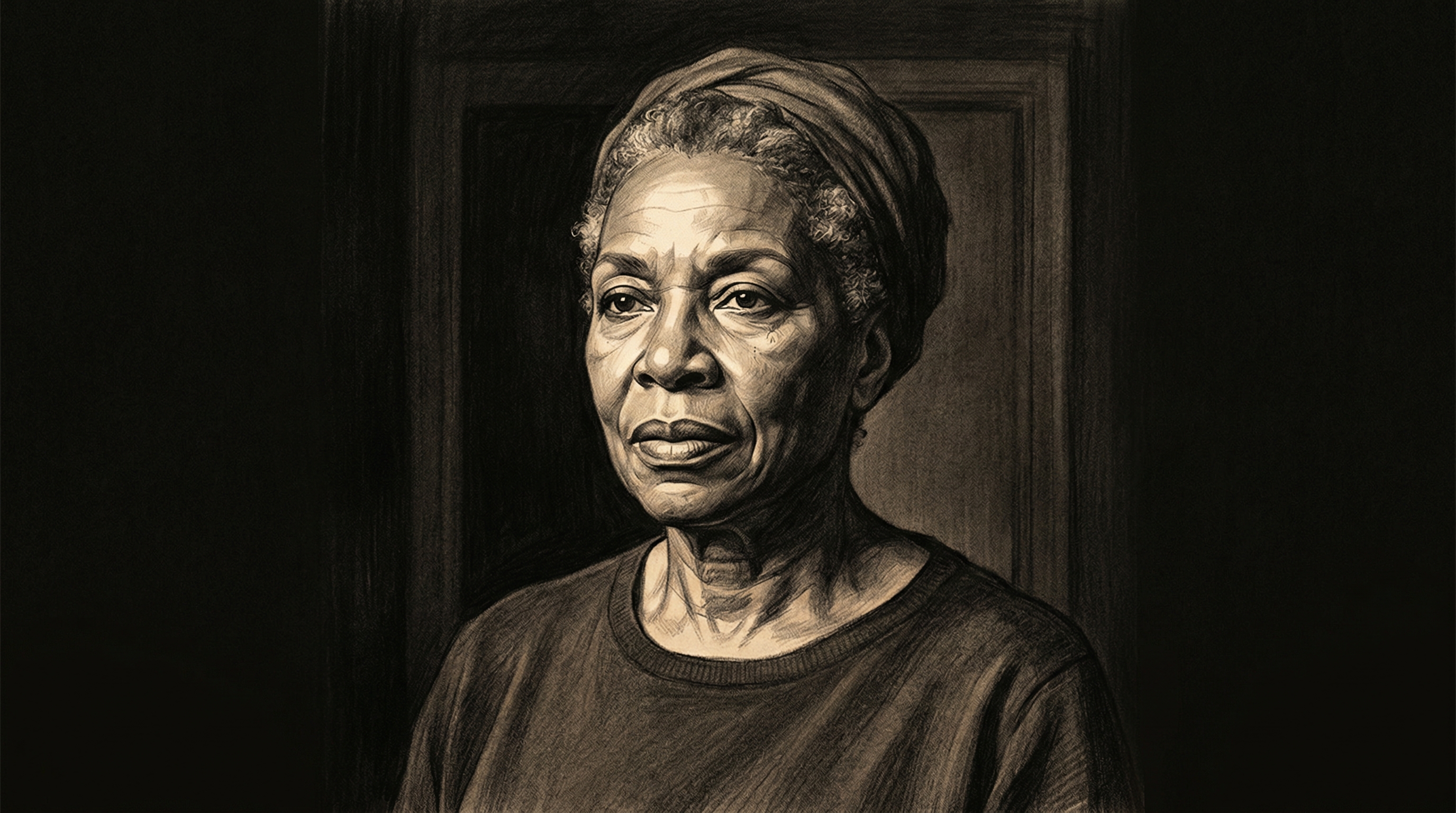
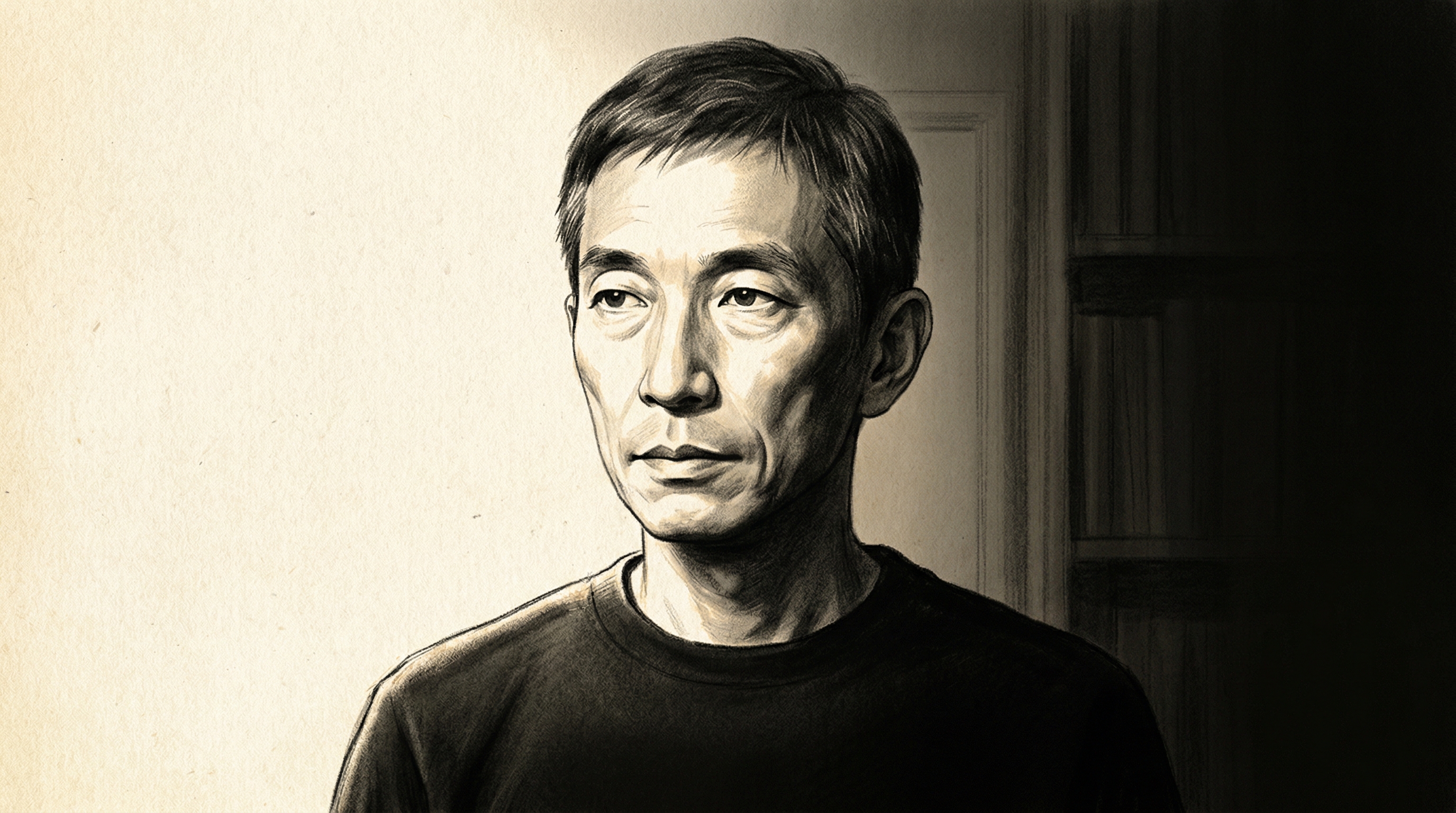
An Emma is the external architecture that protects creative work over a lifetime — a person, a place, a discipline, or a system that holds the walls around someone's deep work so they don't have to. Darwin had his wife Emma. Hemingway had Finca Vigía. Murakami has his trained body. The Emma Problem is that almost no one alive today has access to any of these — and creative work can't survive without the architecture they provide.
This article is for anyone trying to build a body of work — a book, a business, a craft, a practice — without the wealth, marriage, or monastic discipline the historical examples relied on.
In the five portraits we published over the past weeks — Darwin, Hemingway, Murakami, Angelou, Bad Bunny — one pattern kept surfacing. Not discipline. Not talent. Not even routine, though all five had extraordinary routines.
The pattern was this: every one of them had something outside themselves that held the walls around their work.
Darwin had Emma — the woman who read to him on the sofa, shielded him from visitors, and kept the household running for forty years so he could disappear into his study every morning at eight. Hemingway had Finca Vigía — a farm outside Havana with a staff, a tower, and a wife who enforced the morning silence. Murakami had his own body — trained like a marathon runner's, a physical clock so rigid that his friends couldn't follow him into it. Angelou had her blank hotel rooms — rented by the month, stripped of everything except a Bible, a legal pad, and a bottle of sherry. Bad Bunny had Puerto Rico — the island, the language, the culture that told him who he was when the industry told him to become someone else.
Five creators. Five architectures. Five walls that said no on their behalf — no to the interruption, the distraction, the invitation, the doubt — so the person behind the wall could say yes to the work.
We called this the Emma, after Darwin's wife, because she was the clearest example: a human being whose entire relationship to the work was to protect the space around it.
Here is the problem nobody talks about: most people don't have an Emma.
#The invisible majority
The productivity literature is full of morning routines. Wake at five. Journal. Meditate. Do your deep work before the world wakes up. It's good advice, as far as it goes. But it skips the hardest question: who holds the walls while you do it?
Darwin didn't hold his own walls. Emma did. Hemingway didn't hold his walls. Mary Welsh did, and Gregorio the cook, and the staff at the Finca. Murakami holds his walls — but the cost was every friendship that couldn't survive his hours. Angelou rented her walls. Bad Bunny was born inside his.
When you read about their routines, you're reading about the visible part — the schedule, the ritual, the output. The invisible part is the architecture that made the schedule survivable over decades. And that architecture always depended on something the person did not build alone.
Now consider the person reading this. Maybe you.
You don't have a spouse whose full-time role is to protect your study. You don't have a farm with a staff. You haven't organized your entire life around a 4 AM wake-up for forty years. You don't have the money to rent a hotel room every morning. And you can't move to an island.
But you have something inside you that wants to come out. A book, a business, a practice, a craft, a body of work. Something that needs protected hours — not once, but every day, for years.
That's the Emma Problem.
#What it looks like today
A software developer in Berlin works remote. No commute, no office, no separation between where she lives and where she works. Her deep work happens at a desk in the corner of her apartment, three meters from the kitchen where her partner makes lunch. She has no Sandwalk. She has Slack.
A father of two in São Paulo wakes at 5:15 to write before his children get up. He has ninety minutes. Some mornings he has forty-five, because the younger one doesn't sleep. He doesn't stop mid-sentence like Hemingway. He stops mid-thought when he hears footsteps on the stairs.
A designer in Lagos works a full-time job and builds her own thing on the side. Evenings and weekends. She doesn't have Angelou's blank hotel room. She has a shared apartment and headphones.
A founder in Tokyo bootstraps alone. No team, no office, no investor setting the pace. Every day he decides what to work on, when to start, when to stop. The freedom is total. The architecture is zero.
These people are not less talented than Darwin or Hemingway or Murakami. They are less architectured. The walls around their work are thin, temporary, and self-maintained. They hold the walls and do the work at the same time — and anyone who has tried this knows: you can sustain it for a week, a month, maybe a season. But not for years. Not for a life's work.
#The five historical Emmas — and why none of them scale
Go back to the five portraits and look at what each Emma actually was:
| Type | Example | What it requires | Why it doesn't scale |
|---|---|---|---|
| Spousal Emma | Darwin & his wife Emma | A partner who organizes their life around your work | You can't hire a spouse. "Will protect my creative hours for forty years" doesn't fit on a dating profile |
| Purchased Emma | Hemingway's Finca Vigía | Wealth, staff, a physical infrastructure | Fragile in proportion to its cost — the Finca worked until the money and the politics turned |
| Monastic Emma | Murakami's trained body | Forty years of self-discipline, automatic routine | Most expensive in human terms. Murakami's friends couldn't follow him |
| Rented Emma | Angelou's hotel rooms | Money, availability, discipline to show up in an empty room | Requires income to rent somewhere you don't live, every working morning |
| Inherited Emma | Bad Bunny's Puerto Rico | A place, a culture, a language that was always there | You can't choose where you're born — most people's birthplace isn't their creative architecture |
Every one of these is bound to something outside the person who relies on it. A marriage can end. A farm can be seized. A body ages. A hotel can close. An island can be gentrified.
And every one of them is exclusive. Darwin's Emma only worked because Emma Darwin agreed to live that way. Hemingway's Finca only worked because he could afford it. Murakami's routine only works because he has no employer. Angelou's hotels only worked because she could afford not to work from home.
The Emma Problem, precisely stated: the architecture that protects creative work has historically required wealth, privilege, partnership, or extreme self-denial — and most people have none of these.
#What an Emma actually does
Before we can solve the problem, we need to understand what the Emma does — not what it is. Because the form varies wildly (a wife, a farm, a schedule, a room, an island), but the function is always the same.
An Emma does three things:
1. It says no. Darwin's Emma turned away visitors. Hemingway's Finca had rules about noise before noon. Murakami's clock says no to every social invitation. Angelou's bare walls say no to every stimulus. The Emma is the boundary that the person themselves doesn't have to maintain.
2. It says when. Every Emma defines a time — not just a quantity of hours, but a specific, recurring window. Morning for Darwin and Hemingway. 4 AM for Murakami. Early morning for Angelou. The Emma converts "I should work on my thing" into "it is 8 AM and this is what happens now."
3. It holds across days. One good morning is not an Emma. An Emma is what makes tomorrow's morning happen, and the one after that. It's the reason Darwin did the same thing every day for forty years. Not because he was disciplined — because the architecture carried him.
No, when, and continuity. That's it. Any system that reliably provides these three things is an Emma — regardless of whether it's a person, a place, a discipline, or a piece of software.
#The sixth Emma
There is a reason we built Particle.
Not because the world needs another productivity app. The world has plenty of those. But because the Emma Problem is real, it is universal, and it has never had a solution that didn't require money, marriage, or monasticism.
Particle is an attempt at a sixth answer: a digital Emma.
A system that says no — by giving your day a structure that makes the unimportant obvious. A system that says when — by turning "I should do deep work" into a specific window you can see, plan, and protect. A system that holds across days — by making today's rhythm visible in the context of yesterday's and tomorrow's.
It doesn't replace a spouse, a farm, or a body trained for forty years. Nothing digital can do that. But it can do something none of the five historical Emmas could do: it can travel with you. It doesn't depend on a marriage, a mortgage, a hotel budget, or a homeland. It's the architecture you carry in your pocket.
Darwin's Emma held the walls of a brick house in Downe. Hemingway's held the walls of a farm outside Havana. Murakami's holds the walls of a body that wakes at four.
Yours can hold the walls of wherever you are right now — the apartment in Berlin, the early morning in São Paulo, the shared flat in Lagos, the solo desk in Tokyo.
The work you carry inside you deserves an architecture. That's what an Emma is. And for the first time in history, you don't need to be Darwin to have one.